Bluestry: A Script Handwritten Font for Thoughtful Editorial Design
It was a quiet Tuesday morning—coffee steaming, laptop open, and a half-finished recipe ebook layout waiting for its final touch. I’d spent weeks refining the voice, photography, and structure of this seasonal guide for home cooks. But the cover still felt distant—like a friend you recognize but haven’t quite connected with yet. That’s when I opened Bluestry.
Bluestry for Recipe Ebook Covers and Warm, Inviting Typography
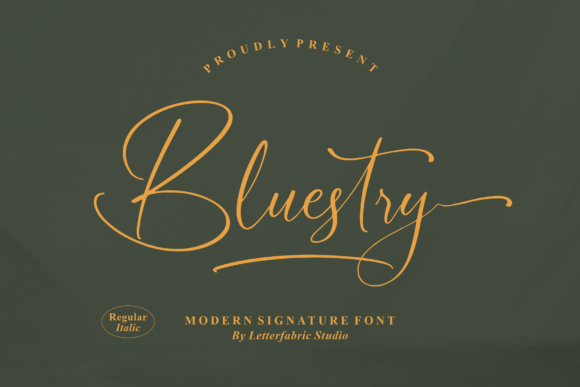
Bluestry is suitable for any projects such as logos, branding projects, homeware designs, product packaging, mugs, quotes, posters, shopping bags, t-shirts, book covers, name cards, invitation cards—and yes, that includes the first thing readers see: the cover. As a Script Handwritten font, Bluestry carries gentle pressure variation, soft entry strokes, and a natural rhythm that mimics ink on paper—not calligraphy, not digital perfection, but something tender and intentional. For the ebook cover, I set the title in Bluestry at 68pt, centered over a linen-textured background. Instantly, it softened the tone. No sharp edges. No urgency. Just warmth, approachability, and quiet confidence—the same feeling you get flipping through a well-loved cookbook left open on a kitchen counter.
Bluestry for Wedding Invitations and Elegant Branding
Later that week, a friend asked me to help design her wedding stationery suite. She wanted “timeless, but not stiff”—something that honored tradition without leaning into cliché. Bluestry answered that need beautifully. As a Script Handwritten typeface, it balances elegance with ease: the lowercase g has a subtle loop; the y descends with grace; capitals feel considered, not ornate. I used Bluestry for names and date on the main invitation, then paired it with a light serif (Garamond Light) for details like venue and RSVP instructions. The contrast worked effortlessly—Bluestry carried the emotional weight, while the serif grounded the information. It’s exactly why Bluestry is suitable for any projects such as logos, branding projects, homeware designs, product packaging, mugs, quotes, posters, shopping bags, t-shirts, book covers, name cards, invitation cards.
Bluestry for Printable Planners and Thoughtful Layout Hierarchy
I’ve been designing printable planners for years—mostly for small creative businesses and coaching clients—and one constant challenge is balancing personality with clarity. Bluestry shines here as a display font for section headers (“Monthly Intentions,” “Gratitude Log,” “Weekly Focus”) and decorative accents (a delicate border flourish, a hand-drawn divider). Because it’s a Script Handwritten font with generous letter spacing and open counters, it remains legible even at 24–30pt on printed A5 pages. I avoid using Bluestry for body text or dense lists—it’s not built for extended reading—but as a Fonts choice for moments that ask the reader to pause, reflect, or feel seen? Unmatched.
Bluestry for Lifestyle Blog Headers and Consistent Content Identity
When I redesigned my own lifestyle blog last season, I knew the header needed to whisper, not shout. Bluestry became the anchor—used only for the site name in the top-left corner and for article titles in featured posts. Its organic flow gave the whole layout breathing room. On mobile, I tested Bluestry at 42pt with 1.3 line-height and light tracking: clean, legible, and unmistakably human. For body copy, I paired it with a warm, readable serif (Cormorant Garamond), keeping captions and navigation in a crisp sans serif (Inter). This kind of intentional font pairing—using Bluestry as the expressive voice and another typeface as the steady guide—is how editorial designers build coherence across platforms.
Bluestry for Homeware Designs and Tactile Packaging Typography
Last month, I helped a ceramicist choose typography for her new mug collection. She wanted something that felt handmade, personal, and quietly luxurious—no sterile sans serifs, no overly formal scripts. Bluestry fit like a second skin. We used it for the subtle phrase “hand-thrown in Portland” on the base of each mug, and for the brand name stamped onto gift tags and shopping bags. Because Bluestry is a Script Handwritten font with authentic texture and variation, it translated beautifully to screen printing and foil stamping. It also holds up well in PDF exports and print-ready files—just be sure to check the included OpenType features: ligatures, stylistic alternates, and multilingual support are all present, making Bluestry a versatile Fonts choice for global creators.
Bluestry for Book Covers and Name Cards in Small-Batch Publishing
As an independent publisher working with emerging authors, I often source fonts that do double duty: expressive enough for a striking cover, refined enough for elegant name cards or chapter openers. Bluestry delivers both. Its lowercase a and e have just enough distinction to avoid monotony; its spacing invites rhythm rather than repetition. I recently used it for a memoir’s title treatment—set large, slightly off-center, over a muted watercolor wash. Readers told me the cover made them *want* to hold the book. That’s the power of choosing the right Script Handwritten font: it doesn’t just say words—it carries tone, intention, and care.
Practical Notes Before You Use Bluestry
- Bluestry works best as a display font—ideal for titles, headers, quotes, and accents—not long-form body text.
- Test readability across devices: it performs well on screens at 28pt+, and prints cleanly at 18pt+ with appropriate leading.
- Always verify commercial licensing if using Bluestry in client work, digital downloads, templates, or paid newsletters.
- Check file formats: Bluestry typically includes OTF and WOFF2 for web use, plus bonus alternates and swashes for richer expression.